







October 9, 2026
URL: https://m.hunts.com/recipes/skillets/benedict-style-polenta-eggs-8474
- Prep time 25 minutes
- Total time 45 minutes
- Servings 8
Ingredients
-
12 cups water
-
8 slices prepared plain polenta (18oz tube)
-
PAM® Olive Oil No-Stick Cooking Spray
-
11 ounces Odom's Tennessee Pride® Mild Country Sausage frozen patties (8 patties)
-
1/3 cup onion, chopped
-
1 can (14.5 oz each) Hunt's® Petite Diced Tomatoes, undrained
-
8 large eggs
-
1/2 cup shredded Parmesan cheese
-
1/2 cup fresh Italian (flat-leaf) parsley
Nutrition Information
246 calories, 9g carbs
Directions
-
Step one
Place water in a large saucepan and heat on medium-high heat until boiling. Reduce heat to medium and keep water at a low simmer (temperature should be around 180° when measured with a digital thermometer).
-
Step two
Trim ends from polenta. Cut polenta crosswise into 8 slices, each about 3/4-inch thick. Coat large nonstick skillet with cooking spray, and heat skillet over medium heat until hot. Add polenta slices; cook 8 to 10 minutes or until lightly browned, turning once. Remove from pan; keep warm.
-
Step three
Heat same skillet over medium heat until hot. Add frozen sausage patties. Cook 8 to 10 minutes, turning occasionally. Remove from pan; keep warm. Add onions to the pan, and combine with the sausage drippings. Cook 2 to 3 minutes or until onions are softened. Stir in tomatoes; simmer 6 to 8 minutes. Keep warm.
-
Step four
Gently break eggs, one at a time, into a custard cup or saucer; then holding dish close to surface of the simmering water, slip egg in. Cook eggs 2 to 3 minutes or until whites are completely set and yolks begin to thicken, but are still soft. Do not stir. Remove eggs from water with a slotted spoon, and drain with spoon or onto paper towels.
-
Step five
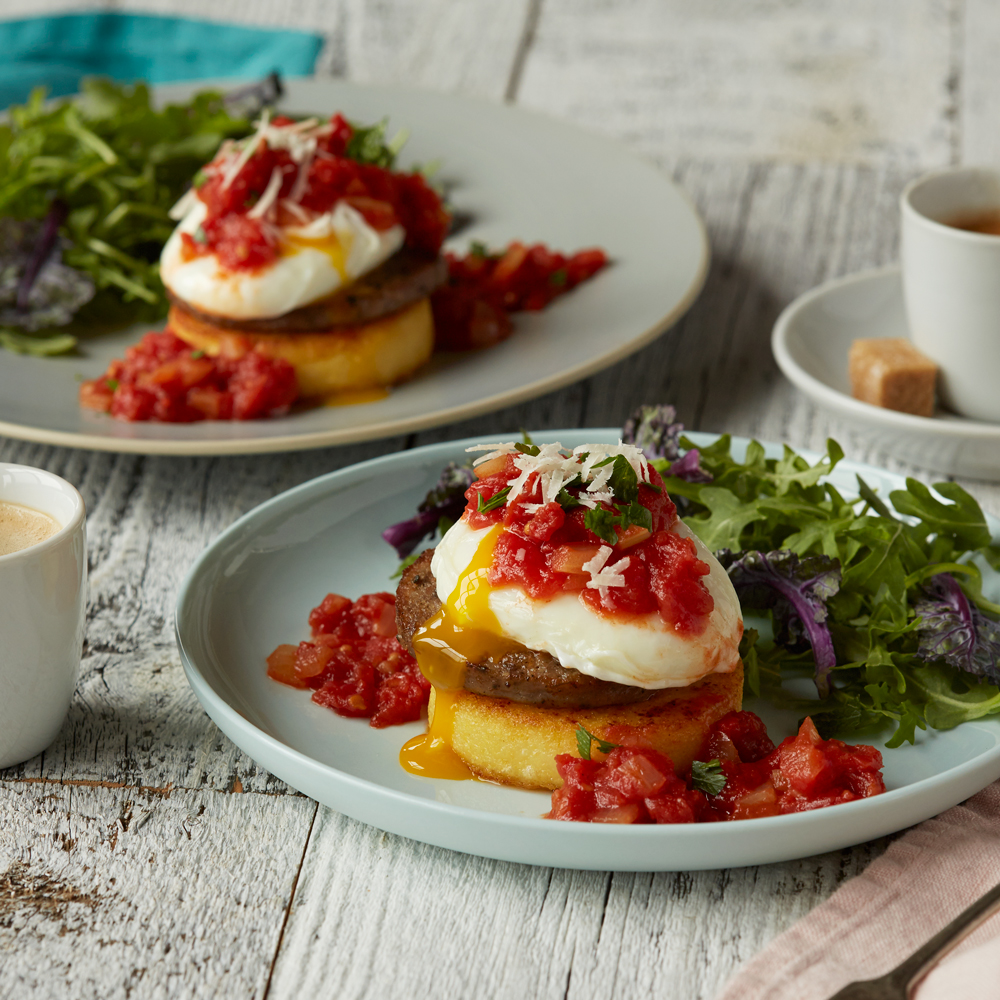
For each serving, place one polenta slice on plate, top with one sausage patty, then with one egg. Spoon warm tomato mixture over each, dividing evenly. Sprinkle with cheese and parsley; serve.
Tips
For best results, use very fresh eggs for poaching. They hold their shape better and are less likely to form wispy threads in the water.